
In today’s fast-paced digital age, businesses no longer rely only on TV ads, flyers, or billboards. Instead, they turn to digital marketing to reach, engage, and convert their audience online. Whether you’re a business owner, a freelancer, or someone curious about marketing, understanding digital marketing is essential.
In this in-depth guide, we’ll explore what digital marketing is, its major types, how it works, and how it can help you drive lead generation, sales, and brand awareness.
What is Digital Marketing?
Digital marketing is the process of promoting products, services, or brands through online channels such as websites, search engines, social media, email, mobile apps, and more. Instead of using traditional methods like TV, newspapers, or radio, digital marketing allows businesses to connect with their audience where they spend the most time – on the internet.
In simple terms, it’s about using the power of digital technology to attract customers, build trust, and grow sales.
Why is Digital Marketing Important?
Today, more than 5 billion people actively use the internet worldwide. Whether they’re scrolling through Instagram, searching on Google, watching YouTube videos, or checking emails, the digital world is where your audience lives.
More importantly, most customers search online before making a purchase decision — whether it’s a product, service, or even choosing a restaurant. This shift in behavior means that if your business isn’t visible online, you’re missing out on significant opportunities.
Here’s why digital marketing is important for businesses of all sizes:
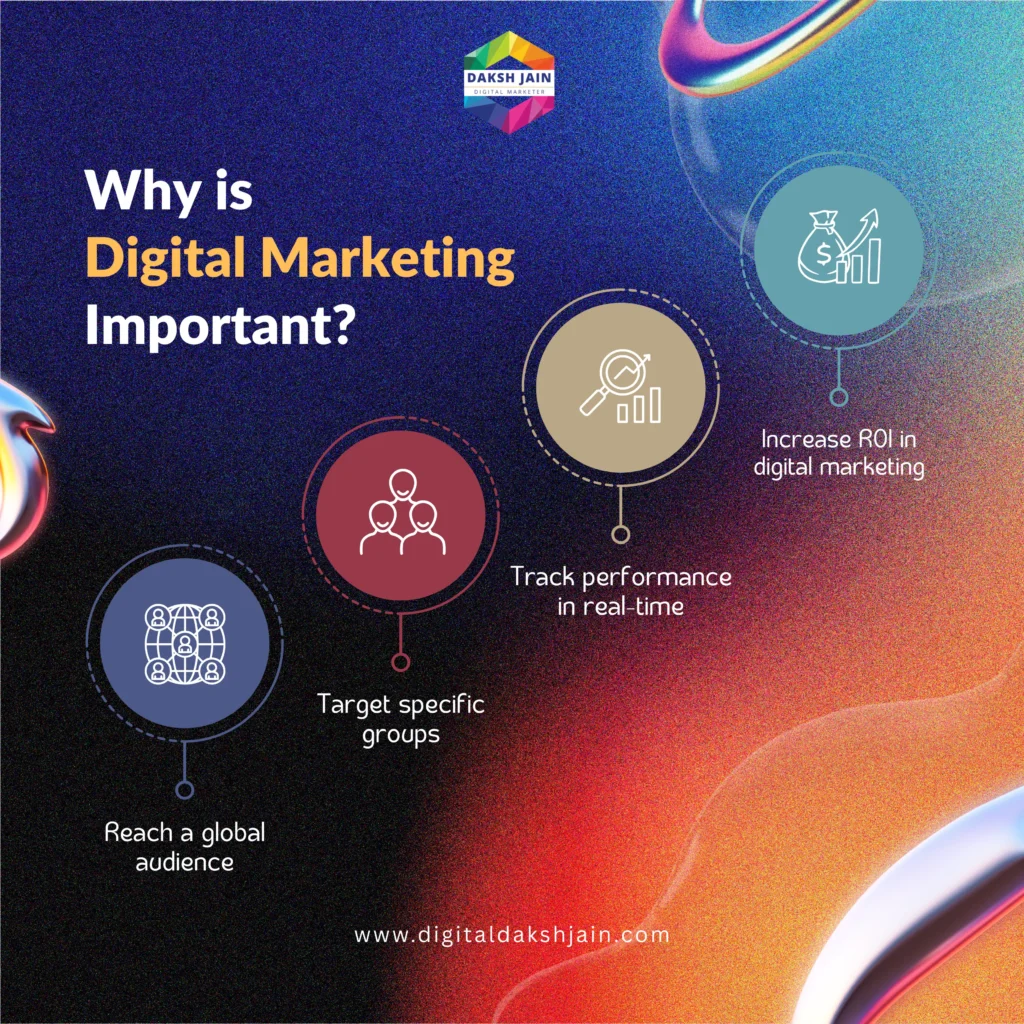
- Reach a global audience: With just a few clicks, your brand can be seen by people not only in your city or country but around the world. Whether you sell physical products or digital services, digital marketing removes geographical limits.
- Target specific groups: You can display ads or content only to individuals most likely to be interested in what you offer, based on factors such as age, gender, location, interests, buying behavior, and more.
- Track performance in real-time: You can instantly see which campaign is working, and how many clicks or conversions you’re getting, and adjust your strategy accordingly. This saves both time and money.
- Increase ROI in digital marketing: Digital campaigns are more cost-effective compared to traditional marketing. You don’t need a massive budget to run a successful ad. Even with small investments, you can generate leads and sales while tracking your exact return.
Whether you’re running an e-commerce digital marketing campaign for an online store or promoting a local bakery, digital tools such as SEO, social media, and paid ads help you compete fairly with larger brands. In fact, many small businesses thrive online purely due to smart digital marketing.
Benefits of Digital Marketing
Digital marketing has changed the way businesses connect with their audience. Whether you’re a startup, a growing e-commerce store, or into freelance digital marketing, these benefits show why it’s so powerful in today’s online world:
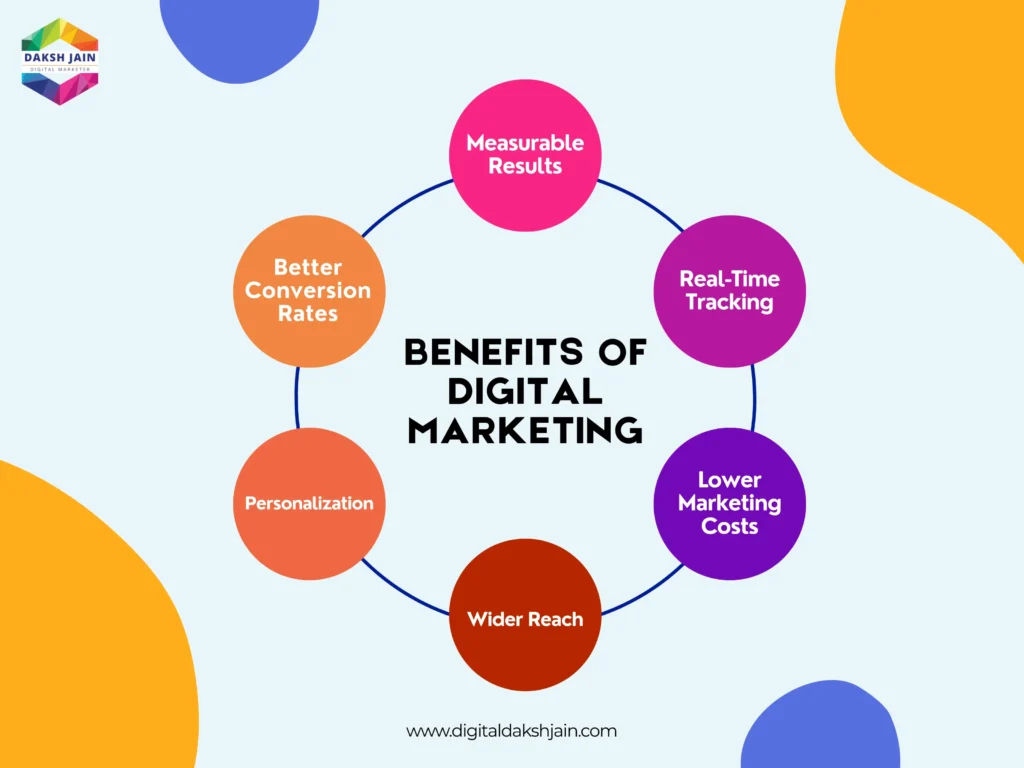
1. Measurable Results
One of the biggest advantages of digital marketing is that you can measure everything. You can track how many people saw your ad, clicked on your link, visited your website, or made a purchase. This helps you understand what’s working — and what’s not — so you can improve your strategy quickly.
2. Real-Time Tracking
Unlike traditional marketing, where results can take weeks to measure, digital marketing gives you real-time tracking. You can see live reports on website traffic, ad performance, and customer behavior. This helps you make quick decisions to boost results.
3. Lower Marketing Costs
Digital marketing is budget-friendly. You don’t need huge money to start. With just a small budget, you can run targeted campaigns on social media or Google Ads and still reach the right audience. This makes it perfect for small businesses and freelancers.
4. Wider Reach
Through digital platforms, your business can reach people not just in your city or country — but across the globe. From local leads to international buyers, your reach is no longer limited by location.
5. Personalization
Digital tools let you create personalized experiences for your audience. You can show specific ads, send custom emails, or recommend products based on their past behavior. This boosts engagement and trust, making customers more likely to buy.
6. Better Conversion Rates
With well-planned strategies like SEO, PPC, and content marketing, digital campaigns often bring in higher conversion rates. That means more people are likely to take action, like signing up, calling, or making a purchase.
No matter the size of your business, from big brands to those starting in freelance digital marketing, digital marketing opens the door to endless opportunities. It allows you to grow faster, smarter, and more affordably in a digital-first world.
Major Types of Digital Marketing

Digital marketing includes many strategies and tools — each one helping your brand connect with the right audience online. Let’s dive into the main types of digital marketing and see how they work in real life:
1. Search Engine Optimization (SEO)
SEO (Search Engine Optimization) is the process of making your website appear higher in Google search results without paying for ads.
Imagine someone typing: “organic skincare products” into Google. If your website shows up on the first page, that’s SEO doing its job.
Key parts of SEO:
- Keyword research – Finding the words your audience is searching for
- On-page optimization – Using those keywords in titles, content, and URLs
- Technical SEO – Making your site fast, mobile-friendly, and easy for Google to understand
- Backlinks – Getting other websites to link to yours (it builds trust)
SEO is essential for long-term visibility, organic traffic, and building authority in your niche.
2. Search Engine Marketing (SEM)
SEM (Search Engine Marketing) is about running paid ads on platforms like Google or Bing. It’s a faster way to appear at the top of search results.
It often involves Pay Per Click in Digital Marketing (PPC), where you pay only when someone clicks your ad.
Why use SEM?
- Great for lead generation
- Useful for time-sensitive promotions
- Helps new businesses get instant traffic
Example: A bakery promoting “Midnight Cake Delivery in Delhi” can run a Google Ad that shows up instantly for that search.
3. Content Marketing in Digital Marketing
Content marketing means creating valuable, helpful, and engaging content to attract your target audience and guide them toward buying.
Content can be:
- Blog articles
- E-books and guides
- Videos
- Infographics
- Social posts
Example: A blog like “10 Best Skincare Tips for Winter” helps your readers and builds trust in your brand and it can boost your SEO too.
Good content answers questions, solves problems, and positions your brand as an expert.
4. Social Media Marketing (SMM)
Social Media Marketing is promoting your brand on platforms like:
- YouTube
- X (Twitter)
It’s about creating posts, stories, reels, and videos to:
- Build brand awareness
- Connect with your followers
- Boost customer loyalty
- Promote products or offers
You can also run paid social media ads to target specific age groups, locations, or interests.
Social media is key for brands wanting daily engagement with their audience.
5. Email Marketing
Email marketing remains one of the most powerful tools in online marketing.
It’s great for:
- Sending product updates and new launches
- Sharing exclusive discounts
- Following up with customers
- Building relationships over time
A well-crafted email campaign can have a huge ROI in digital marketing – sometimes generating $30–$40 for every $1 spent.
Tools like Mailchimp or ConvertKit help automate and personalize your emails.
6. Pay Per Click in Digital Marketing (PPC)
PPC advertising is when you pay each time someone clicks on your online ad.
It’s used on platforms like:
- Google Ads
- Facebook Ads
- Instagram Ads
- LinkedIn Ads
- YouTube Ads
PPC is perfect for businesses that want immediate traffic and measurable results.
Whether you’re promoting a new product or running a festival sale, advertising PPC campaigns give you full control over your budget, audience, and goals.
7. Affiliate Marketing
In affiliate marketing, you allow others (like bloggers, YouTubers, or influencers) to promote your product, and you pay them a commission for every sale or lead they generate.
It’s a win-win:
- You get more reach
- They earn for every successful referral
Many e-commerce brands use affiliate programs to expand without hiring a full-time marketing team.
8. Influencer Marketing
Influencer marketing means partnering with popular online personalities who have a loyal following.
They could be:
- Beauty bloggers
- Fitness YouTubers
- Food Instagrammers
- Tech reviewers
Influencers can create authentic content – like reviews, tutorials, or unboxings – that introduce your brand to new audiences in a trustworthy and engaging way.
It’s especially powerful for lifestyle and consumer product brands.
Digital Marketing Strategy: How to Plan it the Right Way
Creating a strong digital marketing strategy is like building a solid roadmap for your business. It ensures you don’t just post content randomly or run ads blindly – instead, every action is backed by a clear purpose and measurable goal.
Whether you’re managing an e-commerce brand, a local business, or offering freelance digital marketing services, having the right strategy is what separates success from guesswork.
Let’s break down how to create an effective digital marketing plan step by step:
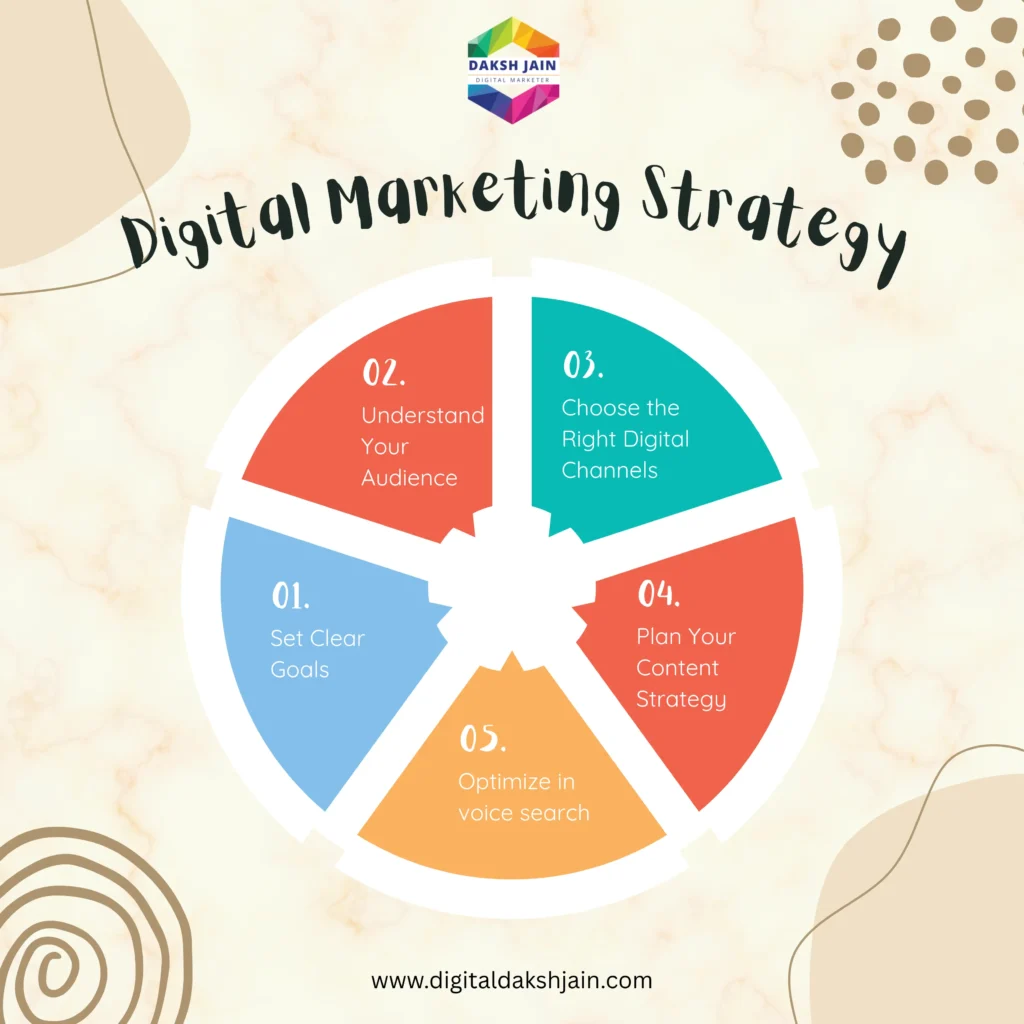
1. Set Clear Goals
First, you need to ask yourself: What do I want to achieve?
Are you looking for:
- More website traffic?
- More lead generations?
- Higher sales?
- Better brand visibility?
- Increased ROI in digital marketing?
Your goals should be SMART: Specific, Measurable, Achievable, Relevant, and Time-bound.
For example: “Get 500 email signups in 30 days through social media ads.”
When your goals are clearly defined, it becomes easier to choose the right platforms, tools, and content types.
2. Understand Your Audience
Every successful online marketing campaign starts with knowing your target audience.
Ask:
- Who are my ideal customers?
- What problems are they trying to solve?
- Where do they spend time online (Instagram, Google, YouTube, LinkedIn)?
- What kind of content do they prefer – blogs, videos, tutorials?
Use tools like Google Analytics, Facebook Audience Insights, or simple customer surveys to collect insights.
Understanding your audience allows you to create tailored messages that resonate and convert.
3. Choose the Right Digital Channels
Now that you know your audience, choose which digital marketing platforms will work best for reaching them.
Popular channels include:
- Search Engine Optimization (SEO) – For long-term organic growth
- Search Engine Marketing (SEM) – For paid visibility on Google
- Content Marketing – For educating and attracting through blogs, videos, etc.
- Social Media Marketing (SMM) – For engaging users and building a community
- Email Marketing – For nurturing leads and customer retention
- Pay Per Click in Digital Marketing (PPC) – For instant traffic and conversions
The best strategy often involves a mix of SEO, PPC, content, and social media, based on your business goals.
4. Plan Your Content Strategy
Now ask yourself: What kind of content will help achieve my goals?
- Want more traffic? Focus on SEO blogs and YouTube videos.
- Want more conversions? Create landing pages and product demo videos.
- Want engagement? Share stories, tips, and behind-the-scenes posts on Instagram.
This is where content marketing in digital marketing shines. Plan out a content calendar that includes:
- Blog topics
- Social media posts
- Email sequences
- Video content
- Paid ad creatives
Quality, consistency, and relevance are key to winning online.
5. Execute, Track, and Optimize
Now it’s time to take action, but digital marketing doesn’t stop after launching a campaign.
You must track performance using tools like Google Analytics, Search Console, and ad platform dashboards.
- A/B test your emails, ads, or landing pages
- Optimize based on data, not just gut feeling
For example, if your Facebook ads are getting clicks but no conversions, test a new image, CTA, or audience.
Remember: Great digital marketing is all about testing, learning, and improving.
Real-Life Example: Freelance Digital Marketing Strategy
Let’s say you’re a freelance digital marketing expert. Your strategy might look like this:
- Goal: Get 10 new clients in 2 months
- Audience: Small business owners and coaches
- Channels: SEO (blog), LinkedIn (personal branding), email
- Content: Write SEO-focused blogs like “Best Social Media Tips for Small Businesses”
- Execution: Post twice a week on LinkedIn, send weekly email newsletters, and optimize your website for local search
Over time, this approach helps you build authority, gain traffic, and attract high-quality clients – all through a digital marketing strategy done right.
Best Digital Marketing Tips for 2025
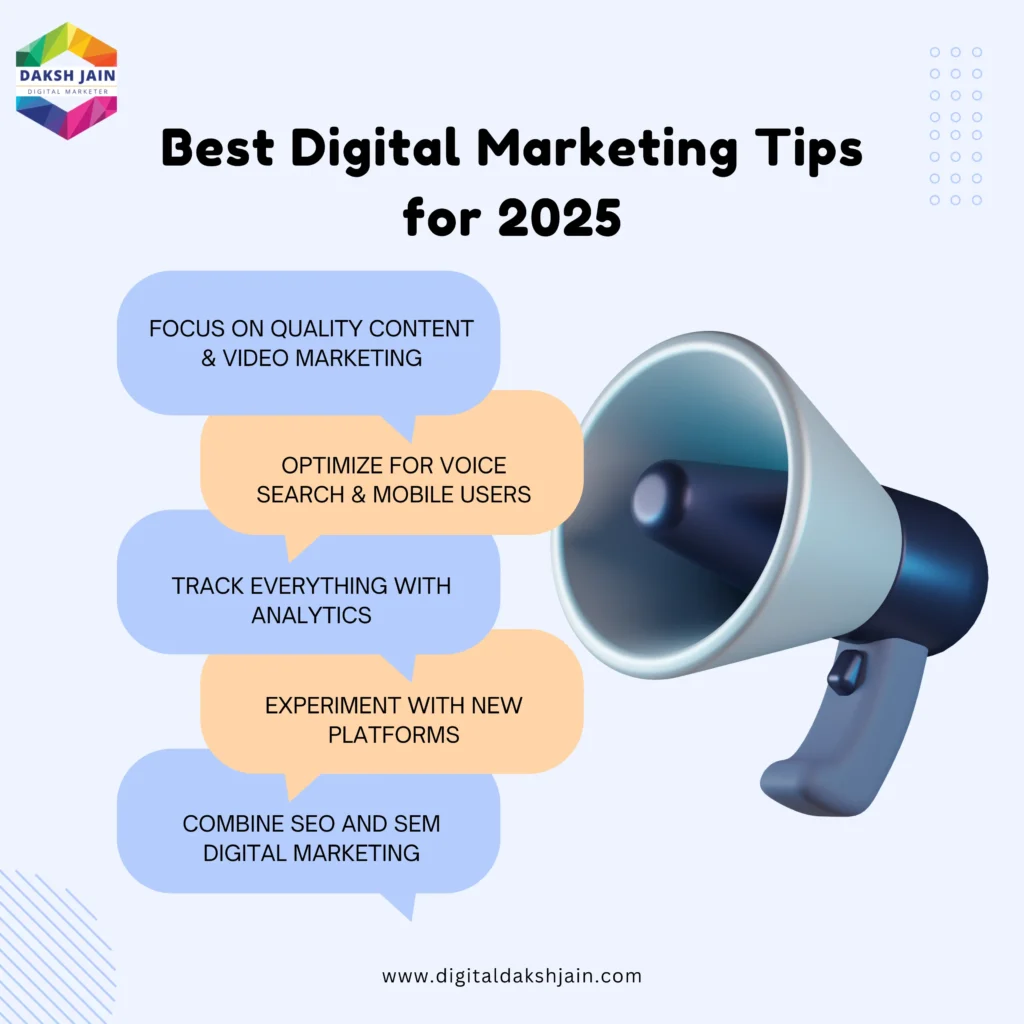
The digital world is evolving faster than ever. What worked in 2022 or even 2024 may not deliver the same results in 2025. If you want to grow your business, boost visibility, or scale your digital marketing strategy, staying updated with the latest practices is a must.
Here are the top digital marketing tips for 2025 that will help you stay ahead of your competitors and build a strong online presence:
1. Focus on Quality Content & Video Marketing
In 2025, content is still king, but it’s not just about writing – it’s about quality and value. Your content must be helpful, relevant, and tailored to your audience’s needs. This includes:
- Blog posts that answer real customer questions.
- Social media content that educates or entertains.
- Video content including YouTube tutorials, Instagram Reels, and LinkedIn explainers.
Video is especially important in today’s scroll-heavy world. Platforms like YouTube Shorts, Instagram Reels, and TikTok continue to dominate user attention. Using video in your content marketing in digital marketing boosts engagement, improves time-on-page, and builds stronger trust with your audience.
Tip: Include your target keywords in video titles, descriptions, and transcripts to boost SEO.
2. Optimize for Voice Search & Mobile Users
With the rise of voice assistants like Siri, Alexa, and Google Assistant, voice search optimization is becoming a critical part of your digital marketing strategy.
People now search in full sentences, like “What’s the best coffee shop near me?” instead of just typing “coffee shop.”
So, optimize your content using:
- Conversational keywords
- FAQs
- Local SEO strategies
At the same time, mobile-first design is no longer optional – it’s essential. Over 60% of web traffic now comes from mobile devices, so your website must:
- Load fast
- Be responsive on all screen sizes
- Offer a smooth, user-friendly experience
Tip: Use Google PageSpeed Insights to test and improve your mobile performance.
3. Track Everything with Analytics
One of the best things about online marketing is that it’s measurable. But to grow, you need to understand what’s working and what’s not.
In 2025, don’t just guess – let data guide your strategy.
Use tools like:
- Google Analytics 4 (GA4) to track user behavior
- Google Search Console to monitor keyword rankings and indexing
- Meta Ads Manager for ad performance insights
- Heatmaps (like Hotjar) to see how users interact with your site
Analyzing this data helps you improve your ROI in digital marketing by doubling down on what works and cutting what doesn’t.
Tip: Set clear KPIs (key performance indicators) like conversion rate, bounce rate, and lead generation numbers.
4. Experiment with New Platforms
While Google, Instagram, and Facebook still rule the digital world, new platforms are quickly gaining attention. In 2025, don’t be afraid to test out:
- Threads by Meta – a growing space for niche and professional discussions
- WhatsApp marketing – great for local businesses, direct communication, and customer service
- Pinterest marketing – especially for product-focused, lifestyle, and visual content brands
Trying new platforms early gives you a first-mover advantage and helps you stand out before the market gets saturated.
Tip: Repurpose your content across platforms — one blog can turn into multiple posts, Reels, and pins.
5. Combine SEO and SEM Digital Marketing
Many businesses choose between SEO (Search Engine Optimization) and SEM (Search Engine Marketing) – but in 2025, the smartest move is to combine both.
- SEO brings long-term, organic traffic.
- SEM (like Google Ads) delivers immediate, targeted visitors.
By using both strategies together, you create a powerful digital presence that covers all stages of the customer journey.
For example:
- Use PPC ads to drive traffic while your new blog posts gain SEO traction.
- Retarget website visitors through Google Display Ads.
- Boost high-ranking SEO content with a small paid budget to get even more views.
Tip: Always align both strategies around your keyword research and campaign goals.
Digital Marketing Trends for the Future
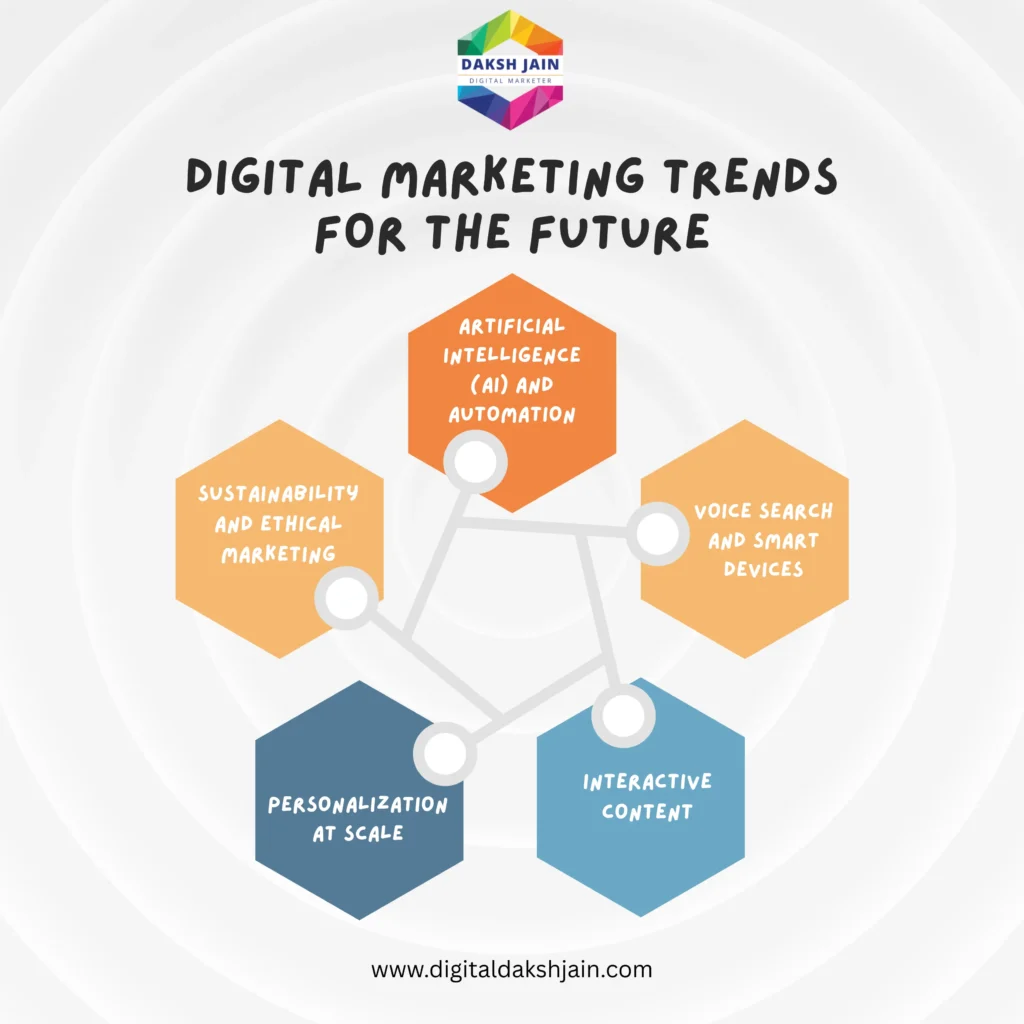
The digital marketing landscape is evolving rapidly. Here are key trends shaping its future:
- Artificial intelligence (AI) and automation. AI tools will continue optimizing tasks like personalization, content creation, and analytics.
- Voice search and smart devices. With tools like Alexa and Siri, optimizing content for voice search will become a crucial way to reach people.
- Interactive content. Polls, quizzes, and interactive videos are becoming popular for boosting user engagement — especially on social media.
- Personalization at scale. Businesses are leveraging data to deliver hyper-personalized experiences to individual customers.
- Sustainability and ethical marketing. Consumers increasingly favor brands that align with environmental and social causes.
Staying on top of these trends will ensure your marketing strategies remain competitive and relevant in a rapidly changing digital landscape.
Final Thoughts
Digital marketing is no longer optional. It’s a must for any brand or business wanting to grow in today’s digital-first world. From content marketing in digital marketing to pay per click in digital marketing, the possibilities are huge.
Start by understanding the basics, choose your channels, and build a smart digital marketing strategy that fits your goals.
If done right, online marketing can take your brand to new heights.
Frequently Asked Questions (FAQs)
About the Author
Daksh Jain is a passionate freelance Digital Marketer who helps businesses grow online through result-driven strategies in SEO, social media marketing, Google Ads, and website development. He shares simple, practical, and effective digital marketing tips to help entrepreneurs, startups, and small businesses build a strong online presence and achieve real growth.