
Hotel marketing is a complex, multifaceted discipline, and it’s easy to waste precious time and resources without producing substantial results. To drive the best performance, hotels need to engage in various types of marketing in hospitality industry. They should take a strategic approach, combining the fundamentals with creative new ways to attract today’s travellers.
What is Hospitality Marketing?
Hospitality marketing is a practical technique for attracting guests to hospitality businesses. These might include hotels, restaurants, pubs, clubs, theme parks, convention centers, and more.
A variety of traditional marketing strategies are used and applied to the specific hospitality business to inspire the public to take a trip, book a stay, have a meal, or experience an adventure.
However, whether it is through branding messages, targeting the appropriate target audience, or activities that keep previous guests engaged, the world of marketing for hospitality and tourism has evolved significantly in the digital age.
In this blog, we’ll explore types of marketing in hospitality industry and tourism in a rapidly changing environment and provide an overview of current trends and strategies for hoteliers.
What are the 7 P’s of Hospitality Marketing?
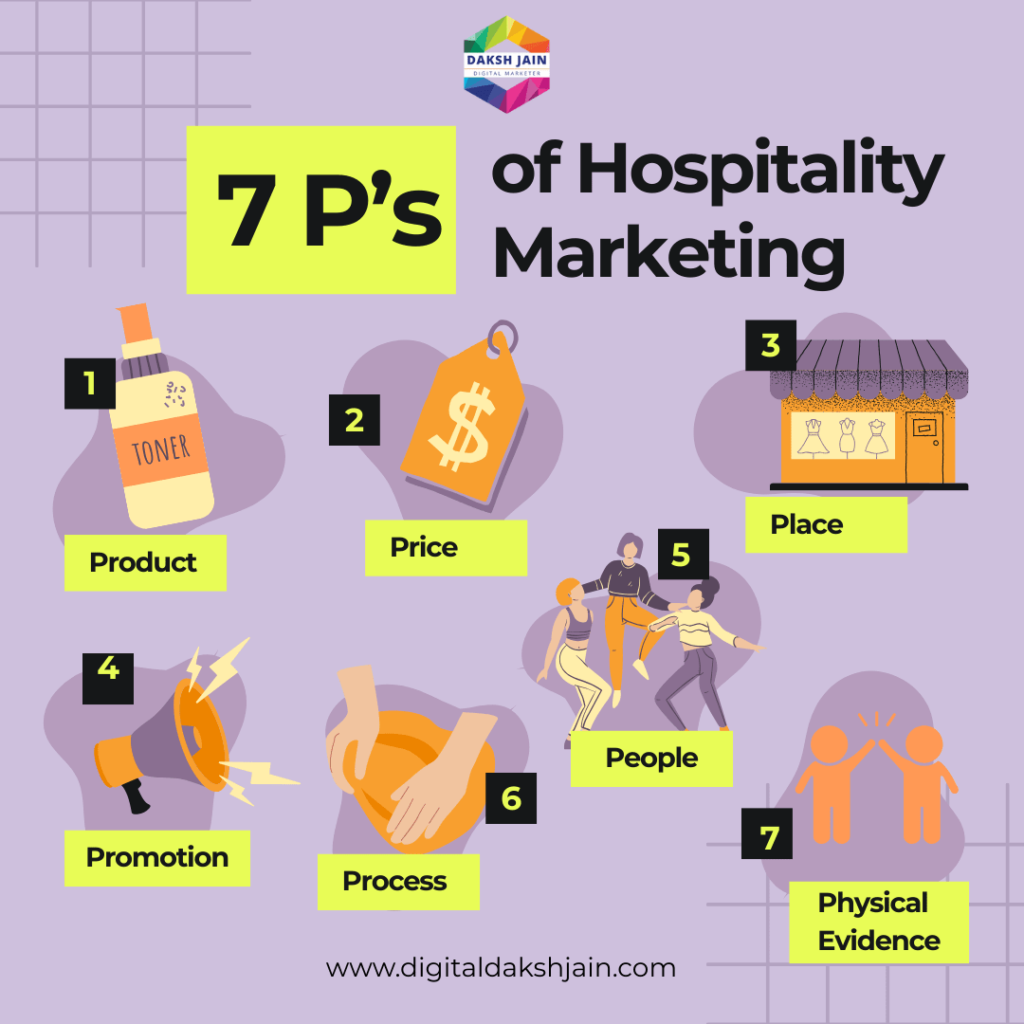
Perhaps hospitality marketing is easiest explained by applying a traditional marketing model to hotels. Jerome McCarthy co-created the 4 Ps of the marketing mix and later the 7 Ps, adding three focused on services.
1. Product: The hotel brand, facilities, and services as perceived by the customer, including reviews.
2. Price: Rate by day of week, market segment, seasonality, room types, and perceived relative to the competition. This includes rate strategy and discounts.
3. Place: Often misinterpreted as the physical location of a hotel, but more adequately described as a place to buy. It is the relative convenience for guests to make a reservation or decide to stay. Today, this primarily means availability across booking channels.
4. Promotion: The conscious mix of activities and chosen frequency of marketing communications.
5. People: The embodiment of the brand, evident in recruitment and staff training.
6. Process: The conscious design of hotel processes to support its brand, for example, using hotel SOPs.
7. Physical evidence: The space where guests and staff interact and the service experience takes place, including the hotel room layout.
Hotel Marketing Ideas for Different Types of Hotels

It is essential to know the target audience and speak their language as a form of marketing strategy. You need to create a brand and appeal to a niche of travellers for your business to boom. Here are some ideas that focus on marketing based on categories of travellers.
1. Luxury Hotel Marketing
- Target Audience: Affluent travelers aged 25–49, mostly rich couples
- Guest Expectations: Top-tier rooms, personalized service, and relaxing experiences
- Decision Drivers: Online reputation, guest reviews, and testimonials
- Luxury Amenities: Valet parking, spa, concierge, salon, fine dining, etc.
- Room Features: 430–4,000 sq. ft. rooms, premium linens, branded products, jetted tubs
- Marketing Focus: Personalized messaging based on guest preferences and income level
2. Boutique Hotel Marketing
- Showcase Local Culture: Highlight local art, food, and hidden gems near your hotel.
- Be Unique: Make your hotel stand out with its own style and connection to the surroundings.
- Personal Touch: Give guests a memorable experience with personalized services.
- Local Events: Partner with local artists, musicians, and promote nearby activities.
- Wellness Options: Offer special wellness packages for guests.
- Targeted Ads: Advertise to specific groups like spa lovers or food enthusiasts.
3. Global Hotel Marketing
- Multilingual Website: Make your website available in multiple languages.
- Simple Content: Use straightforward language for easy translation.
- Local Attractions: Highlight nearby attractions to appeal to global tourists.
- Blogs about Local Events: Write about events and activities in the surrounding areas.
- Immersive Experience: Showcase local experiences to attract international travellers.
4. Independent Hotel Marketing
- Strong Digital Presence: Be active on social media and digital channels.
- Attractive Content: Share photos and videos of hotel surroundings and guests.
- Engage with Customers: Offer holiday packages and discounts.
- Respond to Reviews: Acknowledge all customer reviews, good or bad.
- Personalized Services: Tailor services to individual tastes and preferences.
Hotel Marketing and Sales
The sales team cannot work alone to generate revenue, and the marketing team cannot create the right marketing strategy without the customer data (provided by the sales team). The sales and marketing team needs to work collaboratively on managing guest data efficiently and have regular discussions about building business plans that will generate high revenue and contribute to the growth of the hotel.
Importance of a Unified Approach to Boost Revenue
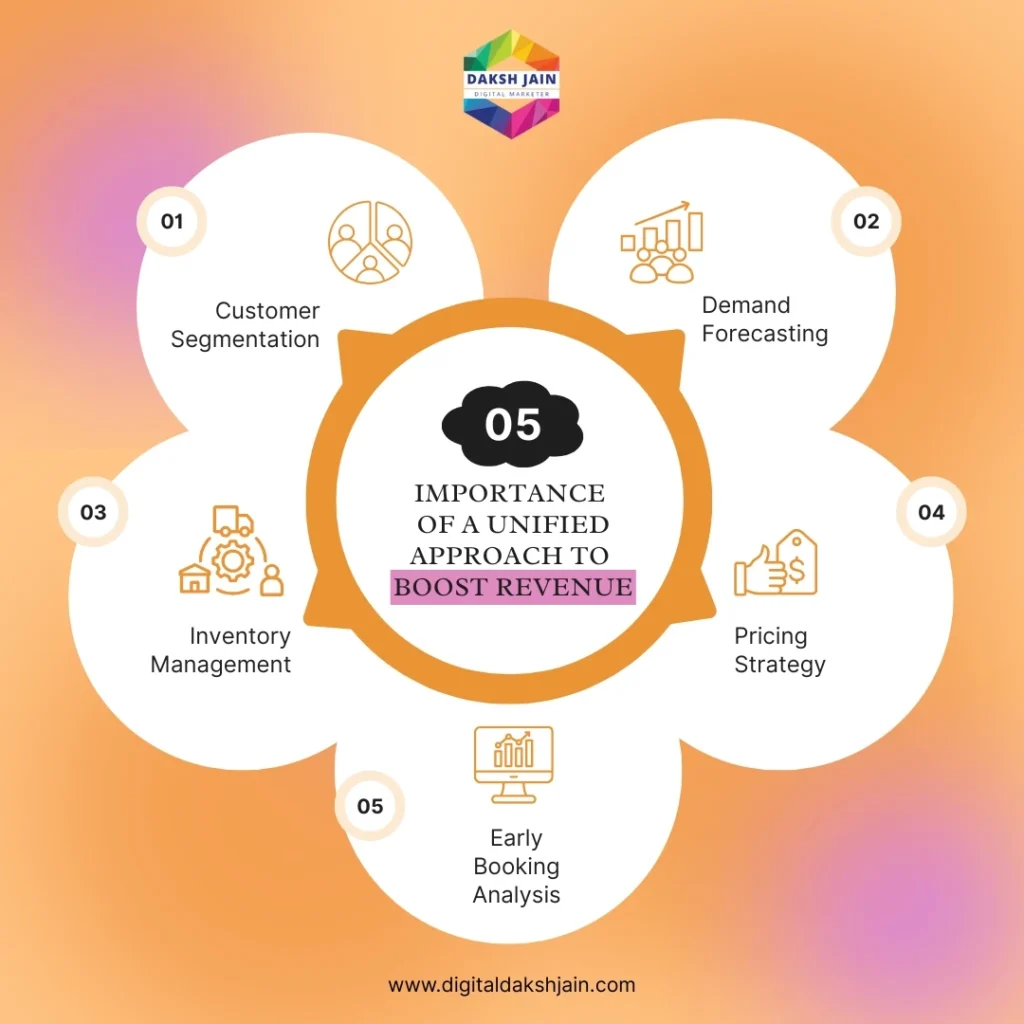
Here are the key points for revenue generation in hotels:
- Customer Segmentation: Divide customers based on demographics, travel reason, stay duration, and booking channel.
- Demand Forecasting: Study past demand and seasonal occupancy to predict future demand.
- Inventory Management: Sell rooms through various channels like emails, social media, travel agencies, and direct bookings.
- Pricing Strategy: Set optimal room prices based on demand and market analysis.
- Early Booking Analysis: Analyze demand and set rates early to attract early bookings.
These components work together to maximize revenue and financial growth for hotels.
Hotel Marketing Trends in 2025 and beyond
Throughout the pandemic, we could observe a shift in hotel marketing strategies. We saw considerable growth in digital marketing, contactless services, and reduced interactions between guests and staff to ensure utmost safety. Some of these changes are here to stay, and new trends are rising.
Types of Marketing in Hospitality Industry
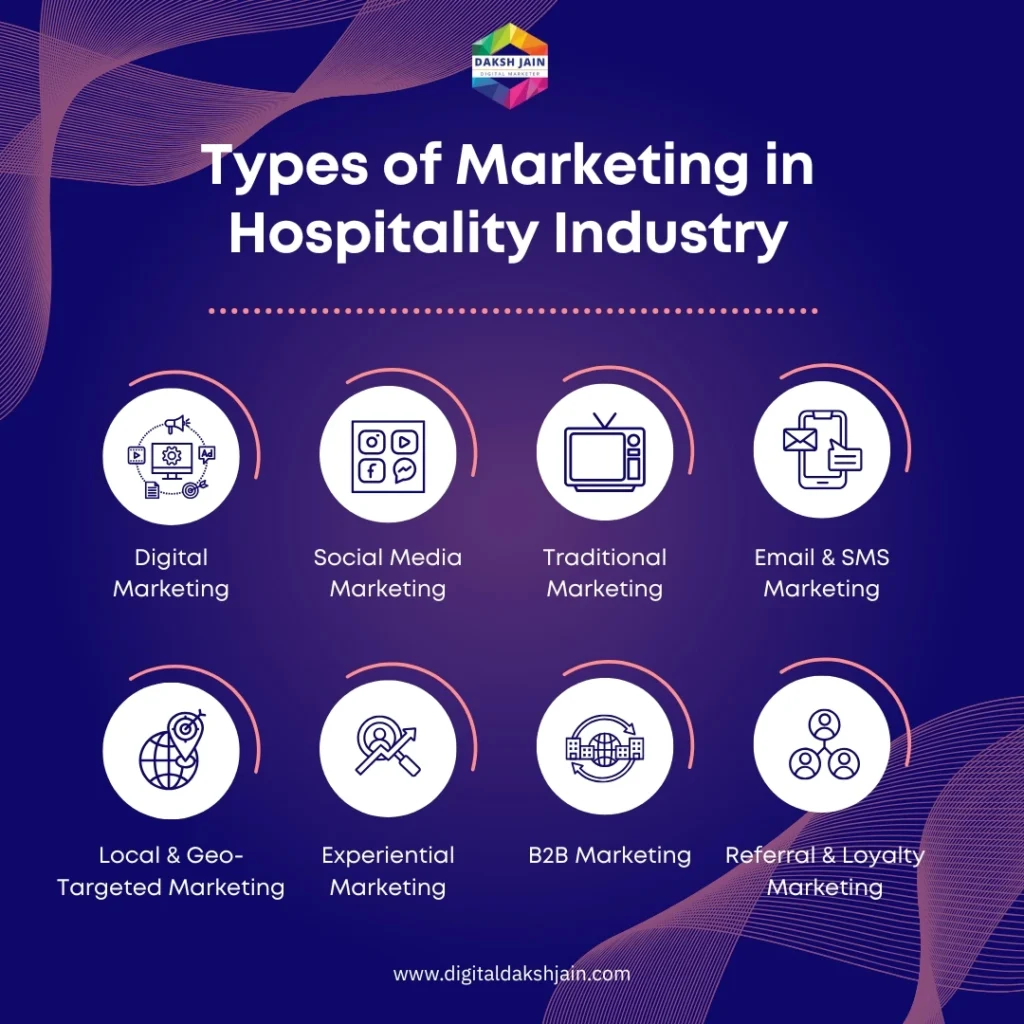
Marketing in the hospitality industry is all about connecting with potential guests and giving them a reason to choose your hotel, resort, or service over others. In 2025, both online and offline marketing will play a big role. Here’s a simple guide to the most effective types of marketing you can use to grow your hospitality business.
1. Digital Marketing
Digital marketing uses the internet to reach people. It’s one of the most powerful ways to promote your hospitality brand.
- Build a professional, user-friendly website
- Show up on Google with SEO (Search Engine Optimization)
- Run ads on Google and social media
- Send email newsletters to past and future guests
- Share useful content and manage online reviews
2. Social Media Marketing
Platforms like Instagram, Facebook, and YouTube are great for showing off your property.
- Post photos and videos of your rooms, views, and amenities
- Share real guest stories and feedback
- Use stories and reels to keep content fresh and engaging
- Partner with influencers to reach new audiences
3. Traditional (Offline) Marketing
Even in a digital world, traditional marketing still works.
- Advertise in local newspapers, magazines, and travel brochures
- Use billboards and posters in busy locations
- Run ads on TV and radio
- Attend travel fairs and distribute printed material
4. Email & SMS Marketing
This is a personal way to stay in touch with your guests.
- Send booking confirmations, updates, and offers
- Promote seasonal packages or holiday discounts
- Share loyalty rewards or birthday greetings
5. Local & Geo-Targeted Marketing
Target guests who are nearby or planning to visit your area.
- Keep your Google Maps and Google Business listing updated
- Use local SEO to appear in “near me” searches
- Run ads that target people in specific areas
- Work with local tourism boards or travel planners
6. Experiential Marketing
Create experiences that guests will remember and talk about.
- Host special events, dinners, or workshops
- Offer personalized stay packages
- Make every guest feel special with thoughtful touches
7. B2B (Business-to-Business) Marketing
Work with other businesses to increase bookings.
- Partner with corporate companies for business stays
- Collaborate with travel agencies and event organizers
- Attend industry expos and hospitality trade shows
8. Referral & Loyalty Marketing
Encourage repeat visits and word-of-mouth marketing.
- Offer rewards for guest referrals
- Create a loyalty program with points or perks
- Give special discounts to returning guests
Final Thoughts: Whether you run a small boutique hotel or a large resort chain, combining these marketing strategies will help you attract more guests and build lasting relationships. Focus on creating value, being visible online, and offering an experience that stands out.
FAQ’s (Frequently Asked Questions)
About the Author
Daksh Jain is a freelance Marketing and Digital Marketing Consultant based in Jaipur, India. With expertise in SEO, social media, and content marketing, he helps businesses grow their online presence. Passionate about simplifying marketing strategies, he delivers impactful and results-driven solutions.